
At Leavitt Dentistry, we know that learning you need to get your wisdom teeth removed can come with plenty of anxiety and confusion. If you want to know more about the process, keep reading — we’re answering eight of the most frequently asked questions about wisdom teeth removal, helping you feel more confident and comfortable with your upcoming oral surgery.
1. Why Do I Have to Get My Wisdom Teeth Out?
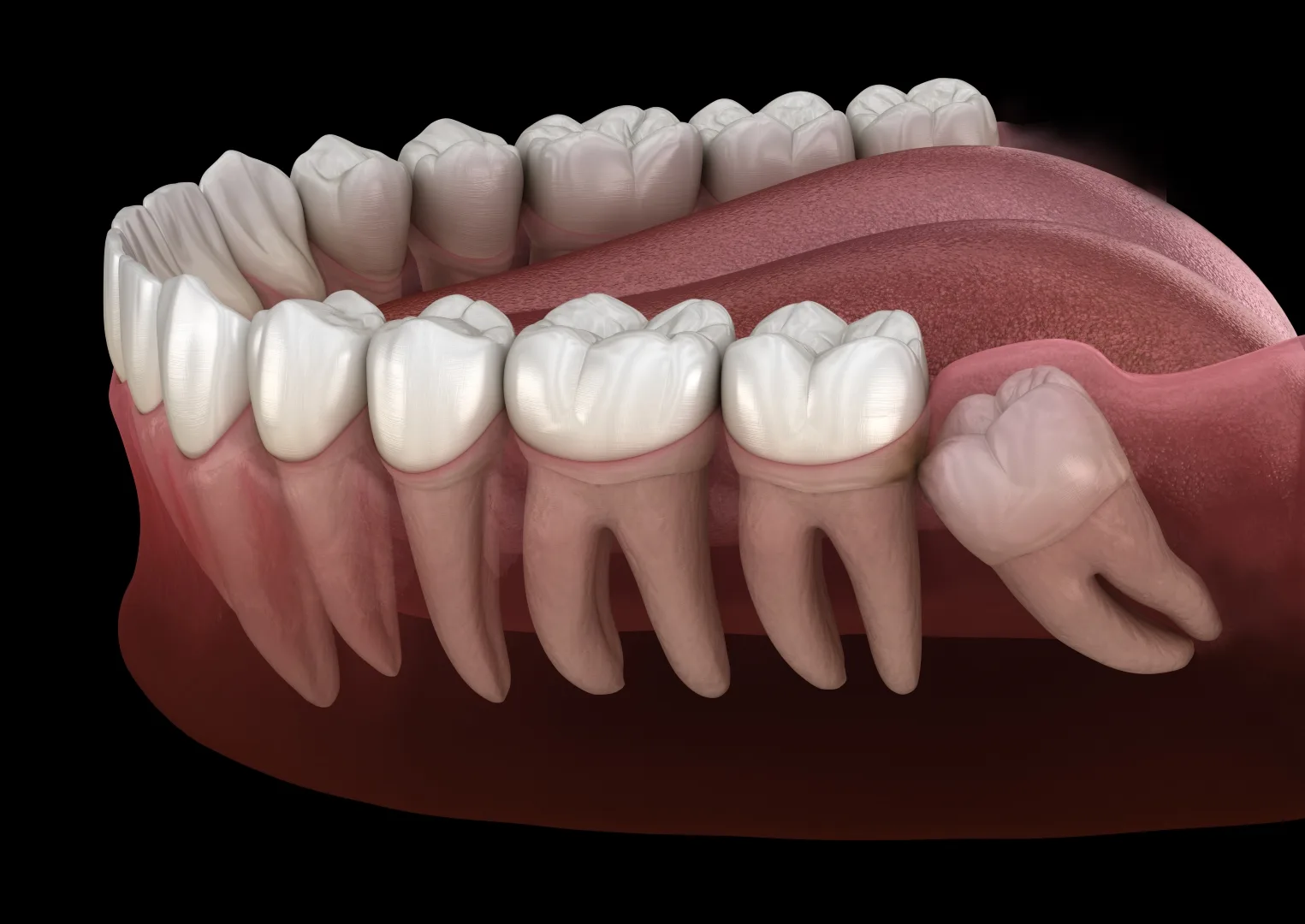
If your wisdom teeth grow in correctly and there’s enough room for them in your mouth, you likely won’t need to have them removed. However, leaving wisdom teeth comes with its risks. They are usually very hard to keep clean and develop gum and jaw bone issues, which are much more complex to treat later in life, therefore it is advisable to have them removed at a young age. For most people, wisdom teeth get stuck in the jawbone or gums or grow in crooked, causing infections, cavities, gum disease, and other issues. That’s why dentists recommend removing them to preserve your oral health, reduce pain, and prevent future problems.
2. What’s an Impacted Wisdom Tooth?
Impacted wisdom teeth are unable to fully erupt. They get stuck below the gums because they’re not located in the correct position, whether they’re angled toward the front or back of your mouth, lying horizontally, or completely embedded within the jawbone. Impacted wisdom teeth often need to be removed because they put pressure on nearby teeth, trap food, develop tooth decay, and damage surrounding teeth or bone.
3. Can I Have Conscious Sedation for Wisdom Teeth Removal?
At Leavitt Dentistry, we offer conscious sedation for wisdom teeth removal surgery. Rather than making you completely unconscious like with general anesthesia, conscious sedation simply induces a more relaxed, blissful state. You will still be conscious, but you won’t feel any discomfort or anxiety during the procedure. Most patients report that they felt like they slept through the procedure.
4. How Long Will the Procedure Take?
The length of the procedure depends on the type of sedation, how many wisdom teeth are being removed, and whether they’re impacted. Most patients can have wisdom teeth removed in 60 – 90 minutes for a full set with IV sedation. As part of your consultation, Dr. Leavitt will let you know how long you can expect the procedure to take so you can be prepared.
5. How Long Will It Take to Heal?
After you get your wisdom teeth out, you can expect a week or two of healing time. However, most people can return to school, work, and other activities three to five days later. Dr. Leavitt will give you detailed postoperative instructions that outline what you can expect from the healing process and when you can start resuming your normal routines.

6. How Can I Reduce Swelling During the Healing Process?
Like with any surgical procedure, most people experience swelling with wisdom teeth removal. Swelling is a natural part of the body’s healing process and occurs when the body increases blood flow to the area, sending additional white blood cells to protect you from infection.
However, excessive swelling after wisdom teeth removal can be uncomfortable and even painful. You can apply a towel-wrapped ice pack to your cheek for about 20 minutes to help ease swelling. If swelling does not get better after a few days, be sure to contact our office — it may be a sign of infection.
7. How Can I Avoid Dry Socket?
Dry socket is a painful condition that occurs when the blood clot at the removal site is missing, whether it didn’t form properly in the first place, was dislodged, or dissolved before the wound healed. You can prevent dry socket by avoiding straws, spitting, and smoking, along with hard, chewy, hot, or spicy foods. If you suspect you may have dry socket, contact us right away, and we’ll help you find relief.
8. What Can I Eat After Getting My Wisdom Teeth Out?
After getting your wisdom teeth out, you’ll need to stick to soft foods for the first few days. We recommend:
- Applesauce
- Mashed potatoes
- Jello
- Mashed bananas and other soft fruits
- Blended soups and broths
- Seed-free smoothies
- Oatmeal
- Scrambled eggs
- Yogurt
- Pudding
- Cottage cheese
As you continue to heal, you can introduce more semi-soft foods, such as pasta, rice, and steamed vegetables. Just be sure to avoid hard, crunchy, spicy, chewy, and hot foods.
Dr. Leavitt will include dietary recommendations in your post-op instructions so you know exactly what you can and cannot eat.
Wisdom Teeth Removal at Leavitt Dentistry
We have treated thousands of patients with oral surgery procedures like wisdom teeth. Dr Leavitt learned many techniques in his residency program, and decades of experience have provided comfortable outcomes for our patients. If it’s time to get your wisdom teeth out, contact Leavitt Dentistry today to schedule a consultation. Dr. Leavitt and his team will perform a thorough examination of your wisdom teeth, come up with a plan for removal, and answer any questions you may have about the procedure and recovery, setting your mind at ease.